‘Another night on Earth’ – a film about Egypt through conversations in taxis

Middle EAst

One of the things that characterises Cairo is its chaotic traffic and the constant noise of taxis’ horns as they try to snake through the streets. The taxis and Cairo are exactly where the film ‘Another Night on Earth’ takes place.

A taxi, a driver and passenger are the three main elements of this film that tells the story of ordinary Egyptians debating and arguing about the present and future of the country since the Revolution.  An uprising, that continues more alive than ever after the last protests that let the army to take over, ousts the President, Mohammed Morsi, and dissolves the Parliament.

The film captures the opinions of the passengers through conversations in taxis.  The director of the film, David Muñoz, chose this way to tell the story because “Egyptians spend so much time in taxis due to traffic jams and the taxis are private spaces that allow people to talk calmly with strangers”.

Despite the film being shot from May to September 2011, the same dialogues can be heard today in the streets of Egypt. One of the passengers stated, “If there is a new president and he makes a new constitution, and we are not convinced, we will carry on the protests. If there is no change, we will force him to resign”.

Another passenger asked, “Where is the revolution? This is not a revolution. Revolution means change at all levels and we are still the way we were at the start, or worse”.

Muñoz affirms, “there is a clear need for change embedded in the people that is irreversible. Everything that I recorded in 2011, I see  today. The problems they had in 2011, they still have in 2013”.

He shot 70 journeys where all kinds of people got into the taxis, including big families, women, children and men. They all talked about different topics, ranging from politics to social problems such as unemployment, education and health.

During one of the journeys, the taxi driver argues with two Muslim women about the protests in Tahrir Square.  While the driver criticised the impatience of the protesters that cannot wait for results, the women defended them – “Nobody wants to wait now, they want it all now, because of the lies and deception they have seen since birth. They never do what they say”.

Religion is also addressed in the film. A woman and a driver discussed the possibility of an Islamist government, forcing women to wear the hijab on the streets. The passenger highlights the right to choose and he thinks of his daughter as an example. “She is the one who has to decide if she wants to wear it or not. The normal thing is for everyone to make up their own minds”.

The 52- minute documentary focusses on the problems of ordinary Egyptians and stays away from the mainstream media discourse. Muñoz found himself fascinated by the Egyptian people “who are very extrovert and brave, who do not close their mouths, and who say what they think without second thoughts or fears which we have assimilated in the West”.

Article published on yourmiddleeast.com
Sexual harassment: a constant in Egyptian women’s life

Uncategorized

Image“Their hands were all over my body and up and under my destroyed clothes. Again, my pants and underwear were pulled down violently and several men, at the same time, raped me with their fingers”. This is part of a testimony of a victim that was raped during the protests in Tahrir Square in June 2012. It is one of more than 20 stories that Egyptian human rights organisations have compiled from victims and witnesses from 2011 to 2013.

The testimonies tell a similar story each time: hundreds of men surrounding the victim and tearing-off clothes, veils and underwear to touch her violently and, in the worst cases, to rape her with their fingers and even sharp objects.

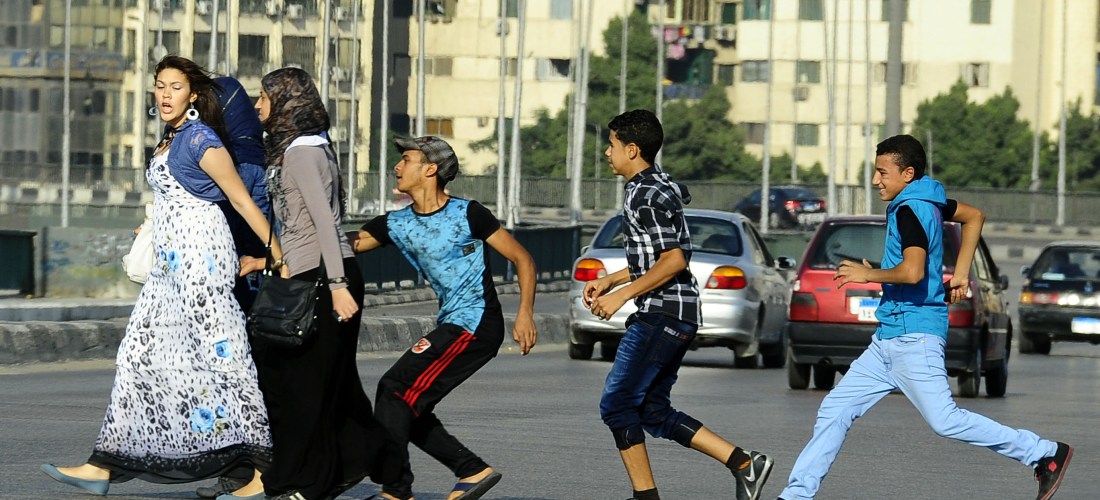
Sexual harassment, either verbal or physical, has become rife in Egypt, in particular, in the heart of the Cairo protests – Tahrir Square. Over 100 cases of sexual assault were reported during the last demonstrations that let the army take over and depose the president, Muhammad Morsi.

These numbers highlight the failure of the government and political institutions to address violence against women in Egypt. “No one had ever been accountable for what happens in Tahrir Square or during demonstrations. For example, in January 2013, cases were documented but there was no reaction from the government, no investigations were opened. People know that whatever happens in the square, there will never be any accountability for it”, explains Masa Amir, a researcher at Nazra Feminist Studies in Cairo.

Sexual harassment is an epidemic in the country, as is reflected in a UN Women study that reported that 99.3% of women in Egypt have suffered one form of sexual harassment or another; the majority saying to have been touched.

Amir denounces the inaction of the political institutions that “rather to address the issue, they use it as a political tool against the opposition”. She gives the example of Essam Al-Haddad, Assistant to the former President on Foreign Relations and International Cooperation, who drew a line between the two demonstrations on 29th June to conclude that the assaults indicate that the “crowds in Tahrir are out of control”.

The ones who are addressing the issue in Egypt are mainly individuals and civil societies who have launched grassroots initiatives to support women and raise awareness of violence against women.

For example the ‘HarassMap’ is an online initiative for victims and witnesses all over Egypt to anonymously share their experiences of harassment, and to report it through mobile phones and social media. The map collects all reports with information that tells the user what kind of harassment was and where it happened.

There is also the initiative of the Tahrir Bodyguards – volunteers that can be recognised by their yellow helmets and neon vests during the protests. They try to prevent sexual harassment while women are in the streets protesting.

A cartoon has also been created. It is Superrmakh – an Egyptian superhero, inspired by Superman cartoons, who helps women and girls stop their harassers.

With this initiative, Ahmed Makhloufto, the creator of Supermakh, wanted to break a taboo within Egyptian society by talking openly about sexual harassment and highlighting the pretexts and other factors that allow for it to continue.

The figures provided on sexual harassment in Egypt may be even higher as many cases remain unreported. The UN Women’s report stated that only 0.3 of women who were harassed contacted the police.

In Egypt, denouncing the harasser is a challenge for the victim as the police tend to convince the women not to pursue it further. “The police usually say it is ok, nothing really happened. Why do you want to get this man into trouble? And even if they document what happened, it is not treated urgently. The survivors often think that if they go to the police, they will be put under a lot of stress, no investigation will take place and nothing will come out of it”, confirms Amir.

The victims face a culture of impunity, denial and inaction regarding sexual harassment in a country where there is also a social wall to overcome. “The victims need a very supportive family and to be strong enough to speak out because our society tends to blame the girls for being harassed. They cannot tell their father or brother because she will be blamed. They usually say: you may have done something wrong or worn something that was not decent. And if they don’t blame her, they tell her not to talk about it because it will bring shame and disgrace to the family”, explains Nada Nashat from Centre for Egyptian Women Legal Assistance (ECWRA).

Despite all the obstacles, Nashat affirms that the number of women who speak out and report the harassment has increased. Another testimony of a victim of sexual harassment concluded, “we will not be frightened; we will not hide in our homes”.